Morocco Spain relations are no longer defined mainly by border disputes and diplomatic suspicion. Trade, migration control and security cooperation have pushed the two neighbors into a more practical partnership, even as unresolved questions continue to test the relationship. The shift became clear after Spain endorsed Morocco’s autonomy proposal for Western Sahara in 2022, ending a period of sharp tension between Madrid and Rabat. Spain’s decision angered Algeria, Morocco’s regional rival。but it opened the door to a broader political reset. Since then, Morocco Spain contacts have intensified through ministerial meetings, business forums and security channels. The arrangement is not an alliance in the traditional sense. It is closer to a working contract between two countries that need each other and understand the cost of another prolonged breakdown.
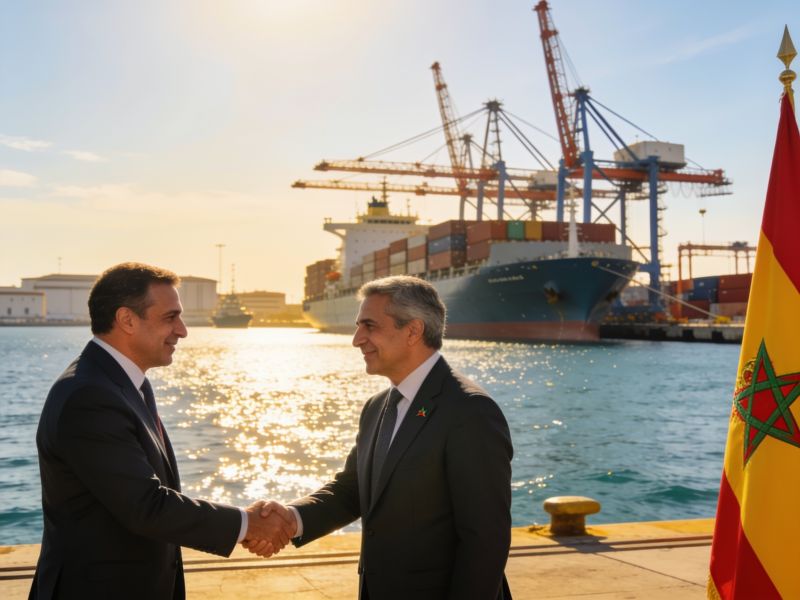
Migration remains the most immediate measure of Morocco Spain cooperation. Morocco has become a key partner in efforts to reduce irregular crossings toward the Canary Islands, Andalusia, Ceuta and Melilla. Spanish and Moroccan security services exchange information on smuggling networks, patrol routes and suspected extremist activity. The cooperation has produced visible results at some points, although the pressure has not disappeared. Families in northern Morocco still watch the sea for small boats leaving from beaches near Tangier, while Spanish emergency crews continue to respond to dangerous crossings. The border around Ceuta and Melilla is especially sensitive. A sudden policy change。a protest or a diplomatic dispute can quickly create a surge of movement. Morocco Spain coordination therefore works best when political communication stays open and security agencies are given room to act without public confrontation.Economic ties provide the relationship with a sturdier base than official speeches alone. Spain is one of Morocco’s most important European trading partners, and Spanish companies operate across automotive manufacturing, banking, construction, renewable energy, food processing and logistics. The Tangier Med port has strengthened Morocco’s role as a manufacturing and distribution platform linking Europe, Africa and the Atlantic. Spanish suppliers benefit from proximity, lower transport costs and access to a growing industrial market。while Moroccan producers gain a nearby route into the European supply chain. For Morocco Spain business relations, geography is a powerful advantage: a short sea crossing can connect factories in northern Morocco with assembly plants and warehouses in southern Europe. Executives often describe the partnership in practical terms. Trucks, components and contracts matter more to them than diplomatic symbolism, though political uncertainty can still affect investment decisions.Energy and infrastructure are adding another layer to the Morocco Spain agenda. The two countries are connected by electricity links across the Strait of Gibraltar, and they have discussed cooperation in solar power, green hydrogen, ports and water management. Morocco’s large renewable-energy projects fit Spain’s interest in expanding low-carbon supply chains, while Spanish engineering firms bring experience in grid development and transport infrastructure. Yet energy cooperation carries political risks. Algeria’s dispute with Morocco has already complicated regional gas politics, and Spain must balance its commercial interests with wider European energy concerns. The Morocco Spain relationship also faces pressure from public opinion. Spanish communities near the border remain focused on security and migration, while many Moroccans expect clearer movement on visas。employment and Western Sahara. A partnership that delivers security cooperation but leaves ordinary travelers facing long queues and uncertain paperwork will eventually lose public support.
For now, Morocco Spain ties appear resilient because both governments see more value in engagement than confrontation. Madrid needs Rabat’s help on migration。counterterrorism and regional stability. Rabat wants investment, political recognition and dependable access to European markets. That mutual dependence has not erased disagreements over fishing rights, border arrangements, human mobility or the future of Western Sahara. It has, however, changed the way disputes are managed. Recent experience suggests that Morocco Spain diplomacy works through quiet negotiation, frequent official visits and carefully calibrated public statements rather than dramatic declarations. The most revealing test may come during a new migration crisis or a sudden regional shock. If the two governments keep communication channels functioning under pressure, the partnership will deepen. If they allow domestic politics to turn every dispute into a public confrontation, the old cycle of mistrust could return quickly.